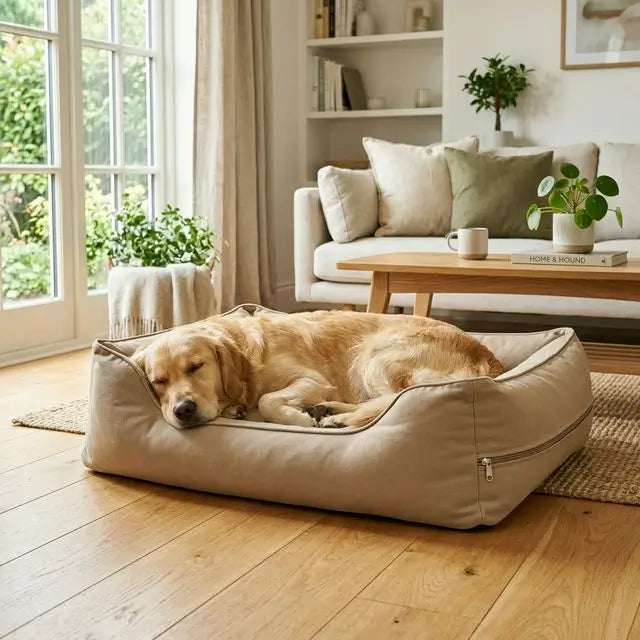


Many UK pet owners have seen calming dog beds all over the market. They promise better sleep, less stress, and a more relaxed furry friend. But once you look closer, it’s not always clear if they truly help or if it’s just clever marketing. This guide on calming dog beds explained breaks it down in a practical way. You’ll learn how these dog beds work, which dogs benefit most, and when they are actually worth your investment.
What Is a Calming Dog Bed?
Calming dog beds explained starts with one simple idea: these beds are built to help a dog feel tucked in, supported, and safe. Most calming dog beds have a round or donut shape, raised edges, and soft faux fur or other plush fabrics. The goal is not magic. The goal is comfort.

A true calming bed is usually specifically designed to create a snug, almost nest-like sleep space. UK pet owners often see them sold as anti anxiety dog beds or anti anxiety beds, but the design matters more than the label. The common key features include:
-
Bolstered sides or high sides for head and neck support
-
Soft materials like faux fur for warmth and coziness
-
A deep centre that lets a dog curl or burrow
-
A non slip bottom to stop sliding on hard floors
-
Washable covers or a machine washable cover for easy care
The RSPCA’s guide to choosing a dog bed notes that dogs sleep in different positions and need a bed that lets them rest comfortably.
What makes a dog bed “calming”?
A calming dog bed works by copying the feeling of a safe, enclosed spot. Think of it as a soft retreat, not a cure. For anxious dogs, the feeling of being lightly surrounded can make rest easier. For a calm pup who already sleeps well, it may simply be a comfy upgrade.
How Do Calming Dog Beds Work?
The short answer is this: how calming dog beds work comes down to shape, softness, warmth, and body support. A dog that loves to nestle into blankets, lean against cushions, or hide from loud noises often likes the same features in bed form.
Many calming dog beds use raised sides and softness to create gentle pressure around the body. It is not the same as weighted blankets for humans, but the feeling can still be soothing. Some dogs relax when their body is lightly bordered instead of feeling open and exposed. That sense of an enclosed space or enclosed environment may help a dog feel secure enough to settle.
The Cornell Riney Canine Health Center’s advice on fearful dogs recommends reducing fear triggers and helping dogs feel more secure in stressful situations. The Merck Veterinary Manual also explains that fear and anxiety problems are best managed with environmental management plus behaviour work, and sometimes medication in severe cases.
Do calming dog beds work?
Yes, sometimes. But calming dog beds work best for dogs with mild anxiety, noise sensitivity, or a strong nesting instinct. They may also help rescue dogs, puppies, and dogs adjusting to a new home. Research suggests environment changes can lower stress, but a bed alone will not fix all forms of anxiety in dogs.
Which Dogs Benefit Most From Calming Beds?
Not every dog wants the same thing. Some dogs love a plush nest. Others would rather sprawl flat on a cool surface. Knowing your dog’s preferences matters more than following hype.
A calming bed often suits:
-
Anxious dogs with mild stress
-
Dogs bothered by loud noises
-
Rescue dogs settling into a new routine
-
Puppies missing their litter mates
-
Small or medium sized dogs that like to curl
-
Dogs that naturally seek a safe place under tables or by furniture
The RSPCA’s dog bed advice says some dogs prefer round or oval beds with sides for curling up, while others need flatter other beds for stretching out. That matches what I see in real homes: the perfect bed depends on sleep style, not trends.


Are calming beds good for dogs with anxiety?
They can be helpful for dogs with mild separation anxiety, nervousness, or fear of sounds. A bed with high quality materials, premium materials, and a secure shape may help a dog settle faster. But if a dog shows extreme distress, shaking, or destructive behavior, a bed is only part of the answer.
Are calming beds worth it for older dogs?
Sometimes, yes, but this is where many buyers pick the wrong product. Older dogs and senior dogs may need extra support for painful joints, arthritis, or joint problems. The Canine Arthritis Resources and Education group recommends memory foam and placing beds in warm, non-drafty spots, with non-slip flooring around them.
When a Calming Bed Is Not Enough
A bed can create a soothing place, but it cannot diagnose fear, pain, or behavior trouble. That matters, because some dogs are not just restless. They are distressed.
Can a dog bed help with separation anxiety?
A bed may help with separation anxiety if the problem is mild. It can become a safe place, carry a familiar scent, and support a calm environment. But when a dog is in real panic, the bed is a support tool, not the cure.
The RSPCA’s separation-related behaviour guidance lists common signs such as destructive chewing, barking, whining, toileting accidents, panting, trembling, pacing, and not eating when left alone. It also notes that some signs begin within a few to 30 minutes after the owner leaves.
When should you speak to a vet or behaviourist?
Watch for these common signs:
-
Shaking or trembling
-
Panting when the room is not warm
-
Pacing or circling
-
Chewing doors, frames, or furniture
-
Whining, barking, or howling
-
Refusing food when alone
-
Trouble lying down or getting up
-
Sudden sleep changes that suggest pain or discomfort
The Merck Veterinary Manual says most serious fear and anxiety cases need environmental management plus training and sometimes medication.
How to Choose the Right Calming Bed
Buying the right bed gets much easier when you stop asking, “Which brand is best?” and start asking, “What does my dog actually do at sleep time?” That one shift saves a lot of money.
How do I choose a calming dog bed?
Use this quick process:
-
Watch how your dog sleeps for three nights.
Do they curl, burrow, lean on the edges, or sprawl flat? -
Measure your dog’s size.
Check curl-up width and full body length from nose to tail base. The RSPCA says the bed should be large enough for natural sleep positions, not just a tight curl. -
Match shape to behaviour.
-
Donut or nest bed: best for dogs that like being surrounded
-
Flat mattress: better for sprawlers
-
Hybrid with bolsters + memory foam: good for older dogs or dogs recovering from discomfort
-
-
Check easy-care features.
Look for washable covers, a machine washable outer layer, and materials that are easy to clean and keep the bed clean after muddy paws or accidents. -
Think about placement.
The RSPCA recommends a warm, draught-free spot, plus the option of one quiet bed and one near the family. That setup often works better than one expensive bed in the wrong place.
Are calming dog beds washable?
Many are, but not all are practical. I would always choose a removable cover or machine washable cover over a fully stuffed bed that takes days to dry. In warmer weather, drying is easier. In a damp UK winter, that same bed may stay wet too long and start to smell.
Look for these special features before you buy:
-
Non slip or non slip bottom
-
Durable seams for dogs that dig or turn in circles
-
High quality materials
-
Supportive fill that will not flatten too fast
-
Covers you can wash without ruining the shape
Here’s what that means for you: the best calming bed is the one your dog will actually use, can rest on comfortably, and you can keep clean without a fight.
Are Calming Dog Beds Worth Buying?
This is the question every owner asks: are calming dog beds worth it?
The honest answer is: it depends on your dog.
For some dogs, these beds can make a real difference. For others, they are just another place to lie down. In my experience, the results come down to three things: your dog’s behaviour, their body needs, and how the bed fits into their routine.
When calming dog beds are worth buying
A calming dog bed is usually a good choice if your dog:
-
Has mild anxiety or noise sensitivity
-
Gets unsettled by fireworks or thunderstorms
-
Likes to curl, burrow, or lean against raised edges
-
Is adjusting to a new home or routine
-
Needs a cozy, warm, and secure place to rest
These beds can help create a safe place and support relaxation. Some dogs feel more secure when surrounded by soft bolstered sides and plush materials. Over time, they may even start to associate the bed with calm moments.
FAQs
Do calming dog beds really work?
They can, but not for every dog. Calming dog beds work best for dogs with mild anxiety, nervousness, or strong nesting habits. They help create a soothing place and may improve restful sleep. However, they are not a guaranteed fix for all anxiety issues.
What makes a dog bed calming?
A calming dog bed uses a calming design with raised sides, soft faux fur, and a deep centre. These features create a cozy, enclosed environment that helps some dogs feel safe and relaxed.
Can a calming bed help with separation anxiety?
It can help a little, especially in cases of mild separation anxiety, by giving the dog a familiar safe place. But for dogs that show distress, whining, or destructive behaviour, you will likely need training or help from a veterinarian.
Are calming dog beds good for senior dogs?
They can be, but many senior dogs need more support. A memory foam base is often better for dogs with joint problems or painful joints. A soft bed without support may actually cause discomfort over time.
Conclusion
Calming dog beds explained comes down to one simple idea: they are designed to support comfort, not fix everything. When used correctly, they can help your dog relax, settle, and enjoy better sleep.
For dogs with mild anxiety, these beds can create a safe place that promotes calm and routine. For dogs dealing with deeper issues like separation anxiety, pain, or fear, they are just one part of a bigger plan.